
Ludo's Thick & Thin Lumber
Volume VI

Guides &
resources.

The questions we answer at the yard every week, written down: what we have learned putting wood through the mill and out the door.

Project requirements vary. Confirm species, dimensions, drying, structural requirements and permitting with Ludo Lumber and the appropriate professionals before ordering material or beginning work.

Choosing a slab: what to work out first
01

Choosing a slab: what to work out first

The questions we ask when someone calls about a slab for a bar or a table, and what makes the conversation go quickly.

Start with the finished piece, not the slab. Is it a bar top, a dining table, a counter? Where does it go, and how is it supported? Every other question follows from that.

Know your dimensions, or bring the room. Length, depth and the space around the piece decide which slabs are even candidates. A photo of the room and a rough sketch save a lot of back-and-forth.

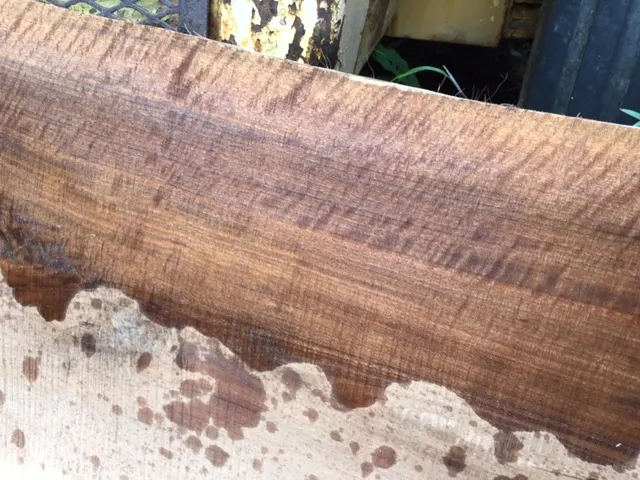
Decide what look you're after. Some people want a slab that reads calm and uniform; others want the knots, the bark line and the character. Both are available, and they are very different conversations.

Ask about the wood's history. Whether a slab has been air dried, kiln dried, or is still fresh from the saw affects what it's suited to. Ask us directly for the stock you're looking at rather than assuming a rule of thumb.

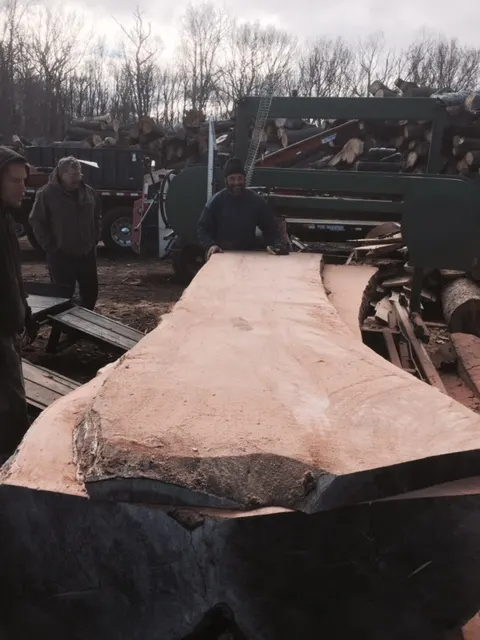
Come and look. The yard mills slabs up to 6′ in diameter and 20′ long, so the racks hold a wide range. Selection almost always goes faster standing in front of the wood. Call before visiting.
Kiln dried or air dried: questions to ask
02

Kiln dried or air dried: questions to ask

A short orientation to the difference, and why the right answer depends on your project rather than on a general rule.

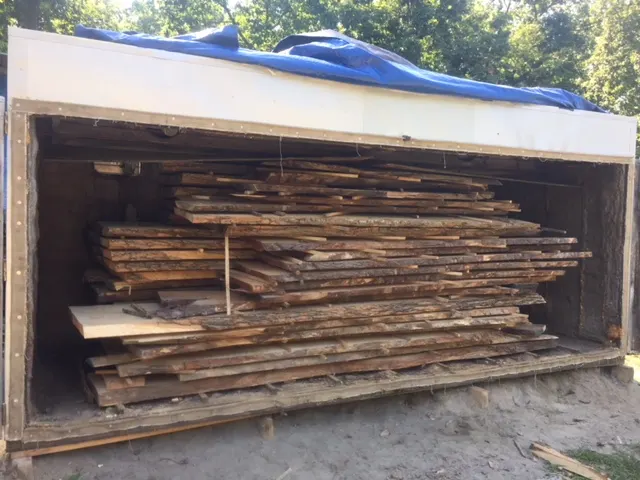
Air drying and kiln drying are different processes with different results. Air drying is slow and happens in open stacks; kiln drying is controlled and takes stock further. Ludo Lumber carries kiln-dried slabs as well as fresh-milled material.

The right choice depends on the piece. Where it lives, how it's built, how it's supported and how it's finished all matter. Interior furniture and exterior structures are not the same problem.

Ask about the specific stock. Rather than applying a general moisture target you read somewhere, ask what a particular slab or lift has actually been through. That is the answer that matters for your build.

Talk to whoever is building it. If a shop, cabinetmaker or contractor is doing the work, bring them into the conversation early. They will have requirements for the stock they want to work with.

If you're unsure, call before buying. We can confirm what the specific stock has been through and whether it fits the project.

Bringing your own logs: what to bring and what to ask
03

Bringing your own logs: what to bring and what to ask

Custom milling starts with a conversation about your logs and what you want out of them. Here's what helps.

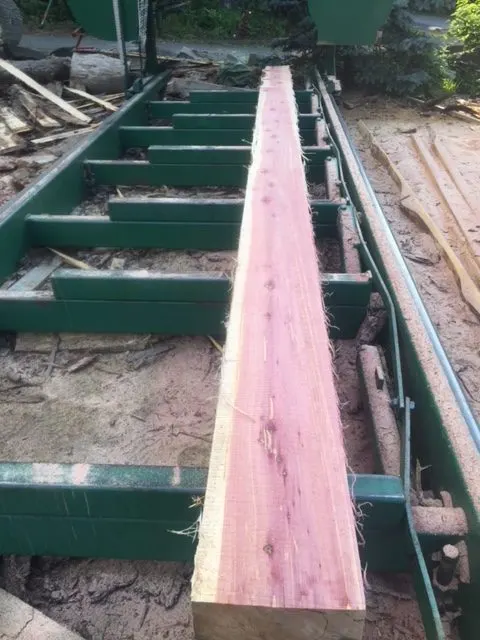
Know what the wood is for. Live-edge slabs, boards, dimensional lumber and beams all come out of a log differently. Telling us the end use up front lets us lay out the cut to favour it.

Tell us what you have. Species if you know it, rough diameter and length, how many logs, and how they're currently stored. Photos help a great deal.

Mention anything embedded. Yard trees and old fence-line trees sometimes contain metal or other hardware. Flag anything you know about before the saw runs.

Know the capacity you're working with. The mill handles slabs up to 6′ in diameter and 20′ long, and dimensional lumber and beams up to 30′. One tree or many logs are both normal here.

Ask about what happens after the saw. Where the lumber goes, how it's stacked and whether it needs drying are part of the same conversation. Raise it before milling day, not after.

Thinking about a timber structure: where to start
04

Thinking about a timber structure: where to start

Custom timber-frame projects begin with a conversation. These are the things worth having ready for it.

Bring inspiration images. Most people start with photos of something they like. That's genuinely the most useful thing to arrive with.

Bring rough dimensions and a site description. Footprint, height, what the structure has to cover or clear, and what it attaches to. Even approximate figures move the conversation forward.

Expect the project to be scoped individually. There is no standard catalog of models. Pergolas, pavilions, carports and similar structures are examples of what people ask about; each one is reviewed and priced on its own.

Understand how responsibilities are split. Depending on the project, Ludo Lumber may coordinate with independent fabricators and qualified drawing professionals. Scope, permitting, engineering and installation responsibilities are defined project by project, not assumed.

Material is quoted separately. Heavy timber is priced as its own line, whether or not we're involved in the rest of the build.

Check your local requirements early. Whether a structure needs drawings, permits or inspections is a question for your municipality and the appropriate licensed professionals, and it can change a design after the fact.

Still deciding?

Walk the racks with us.

Selection goes faster in person. Bring your dimensions and a photo of the room and we’ll pull what fits.